Mr. Honda’s warning about water
The Wind-Up Bird ChronicleMr. Honda’s warning about water is both a practical injunction to wait and an ominous prediction addressed to Toru Okada. Mr. Honda cannot specify what kind of water will matter; instead, his recollection of Nomonhan gives the warning its weight, while the later return of the image connects his battlefield experience to Toru’s uncertain future.
The Warning and Its Uncertainty
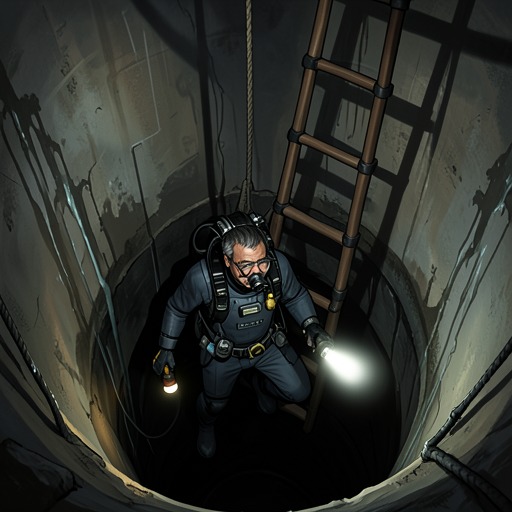
Mr. Honda tells Toru that the flow has stopped and advises him to remain still rather than act. He predicts that Toru may someday suffer in connection with water, which could be absent where it belongs or present where it does not. Asked to clarify what kind of water he means, Mr. Honda answers only that he means water. The warning is thus precise about danger and caution, but deliberately indefinite about the form the danger will take.
The counsel to wait is not presented as a general abstraction detached from experience. Mr. Honda says that it can be difficult to wait for the flow to begin, yet insists that when waiting is necessary, one must wait. His further instruction to assume oneself dead in the meantime gives this patience a severe edge: stillness is a means of survival under conditions where action may make matters worse.
Nomonhan as the Warning’s Source
Mr. Honda grounds his concern in his experience at Nomonhan, where his unit had almost no water for three days after supplies were cut off. The men lacked not only water but also rations, bandages, and bullets. A damp washrag left out overnight offered only a few drops. The soldiers were close enough to see a large river, yet could not reach it because Soviet tanks, machine-gun positions, and sharpshooters lay between them and the water.
The river’s visible abundance and its practical inaccessibility make the episode a stark lesson in the difference between a resource’s presence and the possibility of reaching it. Many of Mr. Honda’s companions tried to get to the river; none returned. Remembering their deaths, he concludes that when the situation calls for stillness, a person must stay still. His warning therefore carries the authority of a traumatic military memory, not the comfort of an easily explained prophecy.
Mr. Honda also places the ordeal within the army’s handling of its survivors. He says that surviving soldiers from Nomonhan were sent to the South Pacific, where many died, while commanders responsible for the debacle went on to distinguished careers and, in some cases, politics. His account makes the water warning inseparable from a wider experience of deprivation and unequal consequences: the men who endured the danger bore its cost, while senior figures advanced.
Recurrence and Narrative Significance
After Toru’s break with Kumiko’s father, the couple stop visiting Mr. Honda. Toru knows the visits were paid for by his father-in-law, and they cannot afford to continue on their own. As their daily pressures accumulate, they eventually forget the old man. The warning is left behind in ordinary life without being resolved or converted into a clear instruction for a particular later event.
It returns in Toru’s thoughts one night, alongside Malta Kano’s separate concern with water and her research on the subject. Toru recalls Mr. Honda’s warning, Malta’s austerities on Malta, and the river at Nomonhan, with its Soviet defenses and the soldiers’ thirst. The echo is not proof that the two figures mean the same thing; rather, it makes water a recurring point of uncertainty that Toru can no longer dismiss as coincidence. The warning’s unresolved ambiguity is its narrative function: a remembered battlefield account becomes a caution whose significance remains open, while the image of water connects past suffering to an uncertain future.